header-image

Freedom Watch On Fox

Arts and Media Freedom

Blog

Featured Video

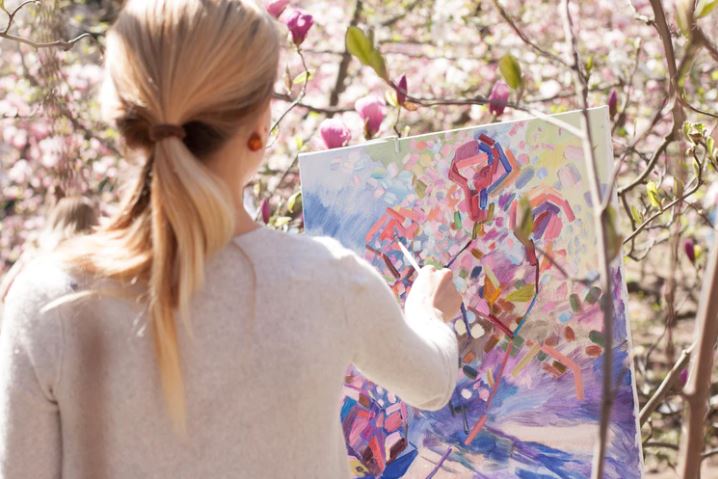
A lot of artists find their inspiration in nature since nature itself provides incalculable sources of inspiration.

Artist: Learn, Create, and Restore


Being an artist does not really require a lot of things. The most important is your creativity. Why? Because if you are creative enough, you can make use of anything available to make an art.

Yes, before one become a professional artist, certificates and trainings are highly encouraged. We cannot deny the fact that clients and people tend to look on someone’s education before they appreciate that person. But what if, you do not have the resources for the trainings and to have certificates, all you can do is to make a name from scratch and be resourceful enough to make everything work.

Fortunately, all types of media are accessible and people can easily search for tips and suggestions for beginners when it comes to creating an artwork. Before making a research, decide on what kind of art you really want to make. This will give you a straight path and consistency, which is obviously important to target a specific market at first, then make the audience broader after.

Creating an art will of course need materials. It does not have to be expensive. Again, art most of the time is just about creativity with expression and reflection. As an artist, it is you who will decide if your work will be an objective or a subjective one. It could be based on facts or personal opinions. After deciding of what you want to express, think of an available resource you have to make it happen and finish your work.

Artwork, if done wholeheartedly, can be seen by how you value it. So also consider reading articles about restoration. Be open on the possibilities that in time, you will be needing to retouch your art. Restoring an artwork is not as easy as finding a professional from burnabyappliancerepairs.com. You as the creator will be the one to restore it so you must have the knowledge how.

What is New Media Art

New media artwork contains artworks created and created by way of fresh media technology, including virtual artwork, computer images, computer cartoons, digital artwork, interactive artwork, sound artwork, Web artwork, video games, robotics, 3D printing, along cyborg artwork. The expression defines itself from the thereby created art, which distinguishes itself from this deriving from traditional visual arts (i.e. structure, painting, sculpture, etc.). This accent on the moderate is a defining characteristic of much modern artwork and lots of art colleges and important Universities currently offer campuses in “New Genres” or even “New Media” along with a rising number of graduate applications that have emerged globally. New media artwork may involve levels of interaction between art and audience or involving the artist and the general public, as is true in performance artwork. However, as many theorists and curators have noticed, such kinds of discussion, social market, involvement, and transformation don’t differentiate new media artwork but instead function as a frequent ground that’s shrouded in different strands of modern art practice. Such insights highlight the types of cultural practice which arise simultaneously with emerging technological systems and query the focus on social networking, per se.

New Media issues are usually based on the telecommunications, mass-market along with digital electronic manners of providing the artworks demand, together with practices which range from Profession into virtual artwork, functionality into setup.

Since the technology used to provide functions of new media artwork like movies, tapes, net browsers, computer programs, along operating systems eventually become obsolete, New Media artwork confronts serious problems around the struggle to conserve artwork past the time of its own modern production. Presently, research jobs into New media preservation are still now agreeing to enhance the preservation and documentation of their delicate media arts tradition.

Techniques of preservation exist, for example, translation of a job in an obsolete medium to a connected fresh medium, the electronic archiving of the press, and also the usage of emulators to conserve operate determined by obsolete applications or operating system environments.

About the mid-90s, the dilemma of saving functions in electronic form became an issue. Digital artwork such as transferring pictures, multimedia, interactive applications, and computer-generated artwork has different properties compared to bodily art like acrylic paintings and sculptures. Unlike analog technology, an electronic document may be recopied on a new medium with no deterioration of the material. Among the issues with maintaining digital artwork is the formats always shift over time. Former examples of alterations contain that by 8-inch floppy disks to 5.25-inch floppies, 3-inch diskettes into CD-ROMs, also DVDs to flash forces. On the horizon is that the obsolescence of flash drives and portable hard drives, as information is held in online cloud storage.

Museums and galleries prosper from having the capability to adapt the preservation and presentation of physical art. New media art challenges the first procedures of this art world in regards to documentation, its own approach to preservation and collection. Technology continues to progress, and also the character and construction of artwork organizations and associations will stay in peril. The standard functions of curators and designers are always shifting, and a change into new collaborative models of presentation and production is necessary.


Art Is Everywhere

The dictionary defines art as the creating of things that have form and beauty. From that definition of artwork, we could say that artwork encircles us. In each thing we see, even in our houses as well as nature that God has made this amazing, there’s art. Art isn’t simply the sculptures or paintings we find in museums. Art is everywhere, the structures, the most landscapes, automobiles, clothing, and a lot more. All that is an artwork in some manner. We might not get it at first but, yes, each one of these is a few kinds of artwork.

Art and its components can be understood in matters that we see daily. By way of instance, buildings reveal lines, distance, and form. The lines of these windows, the construction itself is the artwork. A home is a great case of volume/form. A home is an artwork with three measurements. A fantastic case of texture, color, and value is a landscape, so the visual feel of these trees and their foliage, the various colors of this landscape, and also the light in sunlight showing worth. Some things like furniture, cars, and jewelry may also be considered works of art.

A good deal of individuals believes artists are only what we see exhibited in museums. Art is much more than that. Everybody has their own method of showing artwork. 1 good illustration of this is the way we would like to dress or look. We would like our tops for use of a specific color. We need it to be eloquent and have a fantastic form. Architects and interior designers have their own manner of showing artwork. Some architects need their buildings to have irregular contours a few prefer them to become tall and straight. Some designers with a great deal of lighting in their layout and many others want it filled with color. Every performer has his own method of expressing artwork.


Media art – a definition

The computer was used to convert the content of previous media such as writing, images and sounds into data. Media today thus represent a kind of universal language, a universal system that produces, stores, sends, exchanges and receives data. In combination with sensors and interfaces as effectors and receptors as well as with algorithms and artificial intelligence that configure and enable control principles, media have become an expert system based on electronic devices and the management of data.

To this end, technology is not just a mediator, but a phenomenon of great transformative power that brings about paradigmatic changes in fields such as science, government and health, financial systems, infrastructure, agriculture, genetics, and telecommunications. Consequently, this potential for transformation, in relation to any relevant social, scientific or purely artistic question, determines the nature of media art and distinguishes it from other art forms. Due to technology, Madison raccoon removal can advertise their services through media.


Media art does not necessarily produce objects, installations, or artifacts

Her elusive character derives from the often ephemeral, if not completely perceived as immaterial, phenomena that she makes her own. Media art, for example, can be software-based, which means that it can only be seen on the screens of computers; material existence does not outline the ontological status of a media artwork. Therefore, one can talk about the art of programming, the algorithmic arts, and more.


Media art is performative

It is participative and interactive. Without the viewer who set the work of art in motion, the work of art would not exist. Media art, therefore, needs activation; which is why we no longer talk about the viewer, spectator or observer in this art form, but about the user. Media art is user art.

Media art is thus socially engaged

It continuously maps the effects of technologies on society, points to existing techno-social configurations or suggests fictional scenarios that are already important in social change or that could be in the future.

In the era of the post-media condition, in which “no single medium predominates, but all different media determine and influence one another”, media art is no longer tied to a specific medium. Media art is universal today.

How Food Industry Benefits from Technology

The food ecosystem has kept dormant for several years, decades even, but that’s growing— and more immediately than ever before. A lot of companies and organizations are confusing the food supply chain and distribution areas with help from more modern technologies. They’re changing the way we produce, preserve, carry, disseminate, plan, order and eat foods.

This is only one example. When used correctly, technology can entirely change the face of the food industry as we know it. Let’s have a look at the many advantages that technology such as pizza turning peel has to provide, as well as some of the ways it’s being utilized today.

Farming Production and Cattle Productivities

You’d be excused for thinking present technology and cloud computing has no point in the agriculture industry. It makes sense, though — especially thinking agriculture is done outside through more physical means. Nevertheless, big data and analytics tools can allow farmers and cattle owners to improve the production efficiencies of their shipments.

Food Storage and Expiration

Food that sits on store shelves may seldom live there exceptionally near to their expiration dates. Usually, the dates given are instead a suggested sell-by date. This happens in the wasting of many various kinds of foods and meals. A lot of grocery and department stores are required to throw away expired foods, whether they’re still good or not.

Correct Plastic Disposal and Recycling

Walk into any grocery or department store and you’ll notice hundreds — if not thousands — of synthetic bags in use. They’re used in local and commercial applications as well, besides increasing their abundance. It’s no mystery that plastic is not good for the environment, but there are several other materials of concern too.

Transportation, Distribution, and Handling Transparency

When raw foods such as fruits, vegetables, and meats are brought along the supply chain, there is a good deal of responsibility from several parties. It switches hands a lot of time, traveling from the farm to trucks to processing and onto store racks. Along the way, any amount of factors can result to its corruption. The incorrect storage of cold foods, for example, can lead in serious infection and therefore the spread of foodborne disease.


𐌢